 Reviews

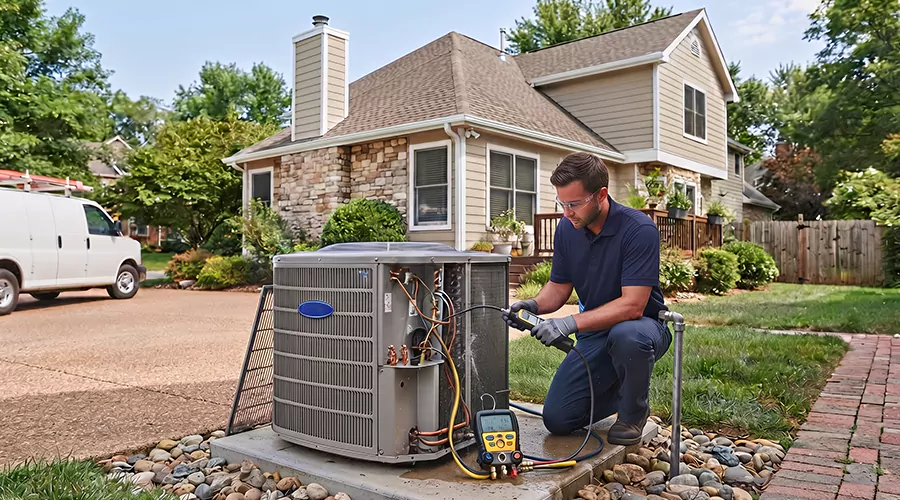
HVAC maintenance cost typically ranges from $175 to $350 for routine professional service in 2026. Many homeowners spend about $250. Annual maintenance plans commonly cost $150 to $500 depending on the number of visits and the equipment covered.
A basic visit is much cheaper than most major repairs. The price can rise when a home has separate heating and cooling systems or multiple HVAC units.
Maintenance should also be separated from repair. A tune-up covers inspection and routine adjustments. Replacement parts or refrigerant work normally create additional charges.
What Is the Average HVAC Maintenance Cost in 2026?
Routine professional HVAC maintenance commonly costs $175 to $350 in 2026. A broader range of about $100 to $650 applies when system type and service complexity are included. Annual plans usually cost $150 to $500 and often include separate heating and cooling visits.
Maintenance Type Planning Table
| Maintenance type | Typical 2026 cost |
|---|---|
| Basic seasonal tune-up | $75 to $200 |
| General HVAC maintenance visit | $175 to $350 |
| Annual maintenance plan | $150 to $500 |
| Air conditioner maintenance | $60 to $200 |
| Furnace maintenance | $80 to $300 |
| Heat pump maintenance | $80 to $150 |
| Split-system maintenance | $200 to $600 |
| Packaged-system maintenance | $450 to $550 |
The HVAC yearly maintenance cost depends heavily on what the contract includes. One plan may cover a single visit. Another may include spring cooling service and fall heating service. That difference should be clear before comparing prices.
What Does an HVAC Maintenance Visit Include?
A standard maintenance visit should inspect system operation and identify developing problems before a breakdown occurs. The exact checklist changes by equipment type. Cooling service normally focuses on airflow and coils. Heating service can include ignition or combustion checks when the home uses fuel-burning equipment.
Cooling-Season Checklist
- Thermostat operation check
- Air filter inspection
- Condenser coil inspection
- Evaporator coil inspection
- Condensate drain check
- Electrical connection inspection
- Capacitor testing
- Blower operation check
- Temperature measurement
- General cooling-performance check
A heating visit uses a different checklist.
- The furnace ignition sequence may be checked.
- Burner operation can also be inspected.
- Venting becomes important with fuel-burning equipment.
- Safety controls should operate correctly.
- A heat pump requires both heating and cooling checks because the same equipment works throughout the year.
The important point is that a maintenance visit should involve more than looking at the unit. Ask what is actually included.
Why Does HVAC Maintenance Pricing Vary?
Maintenance prices vary because homes can have very different equipment. A single heat pump may require less service time than a home with a separate furnace and central AC. Multiple systems raise the price further. Equipment access and seasonal demand can also change labor costs.
System type is one major factor.
- A basic central air conditioner can be relatively straightforward to service.
- A split heating and cooling system requires more inspection points.
- A packaged unit combines several functions inside one cabinet.
- Mini-split systems can become expensive when the home has many indoor heads.
Access matters too.
- Equipment in an open utility room is easier to reach.
- An air handler in a tight attic can require more labor.
Timing also affects scheduling.
- Spring and fall are usually easier periods for planned maintenance.
- Peak summer and winter demand can make appointment availability tighter.
Is an Annual HVAC Maintenance Plan Worth It?
An annual plan can make sense when it includes two useful seasonal visits and costs about the same as booking them separately. Plans commonly run $150 to $500 per year. Some include repair discounts or priority scheduling. The value depends on the actual benefits.
Compare the plan with the cost of individual visits.
- Two $150 tune-ups equal $300 per year.
- A $250 plan covering both visits could be reasonable.
- A $450 plan may still make sense if it includes additional services you would otherwise buy.
Plan Coverage Checklist
- One or two visits included
- Heating and cooling equipment coverage
- Diagnostic fee waivers
- Repair discounts
- Priority scheduling
- After-hours charge breaks
- Filter replacement service
- Additional system options
Do not assume every contract saves money.
- Read the included services.
- A cheaper plan can provide less work.
- A higher-priced contract can still offer poor value when most benefits are rarely used.
How Much Does AC Maintenance Cost?
The AC maintenance cost generally falls between $60 and $200 for routine service in 2026. A more detailed cooling tune-up may reach $250 or more. Refrigerant or replacement parts are normally separate because those items are repairs rather than basic preventive maintenance.
Cooling maintenance usually focuses on airflow and heat transfer.
- The filter should be checked.
- Coil condition matters.
- The condensate drain also deserves attention.
- Electrical startup components can be tested.
A basic service visit should not automatically include refrigerant. Air conditioners operate in a sealed refrigerant system. Repeatedly adding refrigerant can indicate a leak. The maintenance price should therefore be separated from any leak diagnosis or recharge estimate.
How Much Does Furnace Maintenance Cost?
Routine furnace maintenance commonly costs about $80 to $300 in 2026. Fuel-burning equipment can require additional safety checks because the system also handles combustion gases. More complex furnaces can take longer to inspect than basic single-stage equipment.
- A gas furnace visit can include the ignition sequence.
- The flame sensor may be inspected.
- Burner condition matters too.
- Venting should be evaluated.
- The blower needs inspection because it moves heated air through the home.
- Carbon monoxide safety deserves special attention.
A fuel-burning furnace should not be treated like a cooling-only system. The maintenance checklist should reflect the equipment installed.
How Much Does Heat Pump Maintenance Cost?
Heat pump maintenance commonly costs about $80 to $150 for a basic visit in 2026. Annual expenses can be higher because heat pumps operate during both summer and winter. Some homeowners schedule two seasonal checks when the same equipment handles year-round comfort.
- A heat pump uses an outdoor coil during both operating seasons.
- Airflow remains important.
- Electrical components also need inspection.
- The reversing function adds another operating element that conventional cooling-only equipment does not use.
- The same system works many more hours each year.
That makes seasonal observation valuable.
- A problem discovered before winter can prevent a no-heating call.
- A problem discovered before summer can prevent a no-cooling call.
How Does Skipping Maintenance Become More Expensive?
Skipping maintenance does not guarantee equipment failure. It can allow small airflow or drainage problems to go unnoticed. A clogged filter can cost very little to correct. A blocked drain or weak electrical component costs more. Major motor or compressor repairs can reach four figures.
Maintenance Cost Progression Table
| Stage | What develops | Typical 2026 cost |
|---|---|---|
| Routine care | Filter or inspection | $10 to $200 |
| Developing issue | Drain or electrical correction | $75 to $400 |
| Moderate failure | Motor or control repair | $200 to $800 |
| Refrigerant problem | Leak diagnosis and repair | $250 to $1,500 |
| Major failure | Coil replacement | $600 to $2,400 |
| Severe failure | Compressor replacement | $1,200 to $3,000 |
Maintenance cannot guarantee that the expensive repairs will never happen. It can help identify unusual operating conditions sooner. A weak capacitor is one example. The system may still run today. Testing can reveal that the component is approaching failure. A partially blocked drain provides another example. Correcting the restriction early is much simpler than dealing with water damage after an overflow.
What Warning Signs Mean You Should Not Wait for Maintenance?
Routine maintenance is designed for equipment that is still operating normally. A clear performance problem should be treated as diagnosis rather than a regular tune-up. Warm air or repeated electrical trips deserve more attention. Water around the equipment also moves the situation beyond ordinary maintenance.
10 Warning Signs of Trouble
- The system no longer reaches the thermostat setting.
- Airflow becomes noticeably weaker.
- The AC starts blowing warm air.
- The furnace begins blowing cool air.
- Heating or cooling cycles become unusually short.
- A breaker trips during operation.
- Water appears around the indoor unit.
- Ice forms around the cooling coil area.
- New grinding or humming sounds appear.
- The system suddenly takes much longer to heat or cool the home.
Do not schedule a basic tune-up and assume these problems will disappear. Describe the symptom when making the appointment. That helps the technician arrive prepared for diagnosis.
What Safe DIY Maintenance Can You Do?
Homeowners can safely handle basic maintenance tasks that do not involve internal electrical components or refrigerant. Filter checks provide the most useful starting point. Outdoor airflow can also be protected by removing loose debris. Simple thermostat checks help identify control problems before a professional visit.
DIY Maintenance Checklist
- Inspect the filter every month during heavy use.
- Replace restricted filters promptly.
- Remove loose leaves and debris from around the outdoor unit.
- Maintain clear physical space around the outdoor coil.
- Check the thermostat display and operating mode.
- Look around the indoor equipment for water accumulation.
- Do not open electrical panels.
- Do not test capacitors yourself.
- Do not connect refrigerant gauges.
These tasks can support professional maintenance without replacing it.
When Should You Call a Professional?
Professional maintenance is appropriate when service requires internal electrical testing or equipment-specific safety checks. Refrigerant evaluation should also be handled by trained technicians. Fuel-burning equipment needs greater care because improper combustion or venting can create a safety problem inside the home.
- A technician can test electrical components.
- Motor operation can also be evaluated.
- Cooling performance can be measured.
- A gas furnace can receive combustion-related safety checks.
Call sooner when the system shows a clear failure symptom.
- Repeated breaker trips deserve diagnosis.
- Persistent coil freezing also needs professional attention.
- A carbon monoxide alarm requires immediate safety action rather than routine maintenance.
Professional service becomes especially useful when the system has not been inspected for several years.
That visit can establish a new operating baseline.
How Often Should HVAC Maintenance Be Done?
Most homes benefit from professional HVAC maintenance once or twice per year depending on the equipment. Separate heating and cooling systems are commonly checked before their main operating seasons. Heat pumps can also benefit from two seasonal checks because the same equipment works throughout the year.
- Spring is a practical time for cooling service.
- Fall works well for heating equipment.
- A furnace and central AC system can therefore receive two visits each year.
- A cooling-only system may need one main annual visit.
Maintenance frequency can also depend on equipment age.
- Older systems may deserve closer attention.
- Homes with heavy cooling use can place more operating hours on the equipment.
- The manufacturer's maintenance schedule should also be considered.
What Maintenance Tasks Help Prevent Expensive Repairs?
The most useful preventive tasks focus on airflow and drainage because both affect daily operation. Filters should not become severely restricted. Condensate drainage should remain clear. Outdoor equipment needs open airflow. Unusual sounds or repeated startup problems should be investigated rather than ignored.
- Check the filter regularly.
- Keep supply registers open.
- Do not block return grilles with furniture.
- Keep debris away from the condenser.
- Watch for water around the air handler.
- Listen for new startup noises.
- Do not ignore repeated breaker trips.
- Keep previous service records.
Maintenance reports can reveal patterns.
- A capacitor that repeatedly tests weak deserves attention.
- A drain that clogs every season may need more than routine clearing.
Preventive care works best when small changes are recorded before they become major failures.
How Can You Keep Annual Maintenance Costs Lower?
You can control annual maintenance expenses by scheduling before peak weather and comparing the actual scope of each service plan. Basic homeowner care can also reduce avoidable service work. Keeping clear records prevents repeated diagnosis when the same condition returns.
- Schedule cooling service before summer.
- Schedule heating service before winter.
- Ask what the quoted price includes.
- Find out whether one price covers both systems.
- Check whether a maintenance plan includes two visits.
- Avoid paying for benefits you will not use.
- Keep the equipment accessible.
- Replace simple filters yourself when appropriate.
- Save invoices.
A service history can help determine whether a developing repair deserves attention. The lowest advertised price is not automatically the cheapest long-term option. A useful maintenance visit should provide actual testing and inspection.
Conclusion
HVAC maintenance cost usually falls between $175 and $350 for routine professional service in 2026. Annual plans commonly run $150 to $500 depending on the systems covered. Compare the number of visits and included checks before choosing a plan. This week, inspect your filter and write down any new operating changes before your next seasonal service.
Frequently Asked Questions
Annual professional maintenance commonly costs about $150 to $500 depending on the number of visits and the equipment being serviced.
Annual service is a useful baseline for most residential systems. Equipment that handles both heating and cooling may benefit from separate seasonal checks.
Usually not. Routine maintenance covers inspection and basic service. Replacement parts or major corrective work are normally priced separately.
Routine maintenance normally does not include adding refrigerant. A low refrigerant condition can require leak diagnosis and separate service.
It can be. Compare the annual plan price with the combined cost of the visits you would otherwise schedule.
Spring is usually best for cooling service. Fall is a practical time for heating maintenance because both appointments happen before peak seasonal demand.